

Hello, dear friend,
As I take any opportunity to reflect more on what growing and blooming means in leadership, these days my inspiration comes from the books I read and from the experiences of my coaching clients.
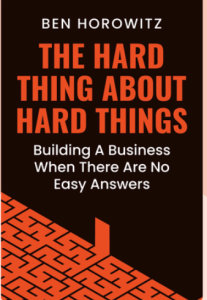
I first came across Ben Horowitz’s book The Hard Thing About Hard Things a few years ago, and I keep returning to it, not just for its candid advice on the messiness of leadership, but for its powerful mental models.
One of the most compelling is the distinction he draws between Peacetime CEOs and Wartime CEOs. Though originally written for tech leaders navigating high-stakes startups, this idea applies far beyond Silicon Valley. It’s about leadership in all its forms, and more importantly, about knowing when to lead how.
What are Peacetime and Wartime leadership modes?
Horowitz defines Peacetime leadership as the mode where an organization is thriving, facing little existential threat, and focused on expanding, optimizing, and building culture. Peacetime leaders encourage collaboration, long-term planning, open innovation, and stability. Their energy is focused on refining and scaling what already works and on building a healthy culture.
In contrast, Wartime leadership emerges when an organization is under serious threat, whether from market shifts, economic downturns, fierce competition, or internal crises. Wartime leaders must act fast, prioritize ruthlessly, make hard calls, and sometimes break things that seemed untouchable. In wartime, the mission is singular: survival.
This distinction doesn’t just apply to CEOs. Whether you lead a team, a business unit, a nonprofit, or even in the political world, the leadership mode you operate in should match the reality you’re facing. The problem is that many leaders don’t recognize which time they’re in, or worse, they operate in wartime mode most of the time.
When the modes are misapplied
If you act like it’s wartime when it’s not, you risk creating unnecessary fear, exhaustion, and control. People feel micromanaged, creativity dries up, and you burn trust and goodwill.
On the other hand, if you cling to peacetime strategies in a moment of crisis, you might miss the urgency of a situation, act too slowly, or avoid making the tough decisions that could save your organization.
The true skill is not in choosing one mode and sticking to it. It’s in knowing when to switch, and having the emotional flexibility to do so without ego or attachment to a preferred style.

My own mistake: leading in wartime when it was peacetime
Years ago, I was leading a retail business that was in a good place: steady growth, loyal customers, a strong team. But I didn’t see it that way. I was operating in constant wartime mode: pushing for faster results, reacting to every challenge as if it were an existential threat, obsessing over optimising costs and processes, tightening controls, and carrying the emotional weight of the entire business on my shoulders.
No one asked me to do this. The business didn’t demand it. But somewhere deep inside, I was afraid to lose momentum, and fear can be a powerful driver of wartime behavior.
The result? Burnout.
I lost sight of the joy of building, and my team started to lose their sense of agency. Looking back, we could have achieved even more if I had trusted the process and shifted into peacetime leadership by delegating more, celebrating wins, and building resilience rather than pressure.
Why Wartime leadership might be more appealing
What makes choosing the right approach even trickier is that many of us, myself included, are wired to chase momentum. We’re driven by the dopamine highs that come with solving problems, closing deals, hitting targets. That internal pace, fast, urgent, always “on”, can be addictive. And when we’re in that mode, it’s easy to impose our rhythm onto the business, even when the business doesn’t need to move at that speed.
I’ve learned that part of leadership is learning to calibrate: to listen not just to your inner engine, but to your team, your customers, the signals from the business itself. Sometimes, the bravest move is not to push harder, but to slow down, observe, and allow things to unfold in their own time. Growth doesn’t always come from acceleration, it often comes from alignment.
To avoid this, I use a set of questions that help me calibrate. Over the years, I could see their grounding power not only on myself, but also in the life of other leaders who became my coaching clients:
- Am I reacting to an outside reality, or to my own fear of failure or loss of control?
- Is this a real crisis, or just a discomfort with slowing down?
- Would my team describe this situation with the same urgency that I do?
- What would happen if we didn’t act immediately, would anything truly break?
- Is my current pace solving problems or just giving me a sense of being useful?
A final note for growing and blooming
Like many of the topics I explore here, distinguishing between Peacetime and Wartime leadership requires more than just understanding two concepts. It also invites us to reflect on what truly drives our behavior. Too often, we separate our professional lives from our personal ones, and our external actions from our inner struggles.
I deeply believe that better leadership begins with better self-leadership.
Growing into stronger leaders means blooming from the inside out.